
If you’re a new parent who’s had the thought “what have I done?” I promise you, you’re not alone. Maybe you miss nights of uninterrupted sleep, having the freedom to make plans that don’t revolve around feeding and nap schedules, or spending the entire afternoon doing something just for you. Maybe you miss your independence, your relationships or your career. Maybe you can’t put your finger on exactly what it is you miss, but the sense of something irrevocably having changed in your life brings up a pit in your stomach, or a sense of sadness and loss.
And then afterwards, you feel guilty for even having these thoughts. After all, you wanted this baby. This is it. You’re supposed to be happy, right?
Here’s something that new parents don’t hear enough: it is normal to miss your old life after having a baby. You can love being a mom and still miss the life you had before motherhood. Grieving parts of your old life is a healthy part of the transition to parenthood. I’m Victoria, a perinatal therapist and mom of two young children. Both my clinical training and my first-hand experiences as a parent have pushed me to write this post. Grieving the life that you lost when you became a parent is something that we don’t talk about enough, and it leads so many new moms to spend their early months (or longer) as a parent consumed by shame, guilt and self-doubting thoughts. Let’s talk about what postpartum grief is, how it’s a normal part of becoming a mother, and how to deal with all of these feelings without letting guilt take over.
What is Postpartum Grief?
When we think about grief, we typically associate it with losing someone we love. But we can also experience grief when we experience a significant life transition - in a sense, losing a part of ourselves. When we are preparing to become parents, we mostly think about what we will be gaining - a beautiful baby, a new kind of love, a growing family. We don’t often fully grasp until after we become parents that gaining a baby means giving up other things - things that we may not want to lose, even if we want a baby so badly.
Postpartum grief, sometimes referred to as maternal grief, describes the sadness, longing and sense of loss that can occur as you adjust to life after having a baby. You may find yourself grieving your independence, your previous identity, your relationships, your body, your career, or the freedom you once had to make decisions based solely on your own needs.
Postpartum grief is tricky - in large part because these losses aren't often visible to other people. You haven't necessarily lost a relationship, moved away, or experienced a major life event that others would recognize as something to grieve. The people around you may only see that you have a healthy baby, a growing family and a life that looks pretty magical on paper. But inside, something feels different. You might feel disconnected from yourself, nostalgic for your pre-baby life, or resentful of how much your daily responsibilities have changed. You may miss the time you and your partner used to have for each other, being able to sleep in, or not having to think about childcare when you want to go to a workout class, or meet a friend for coffee.
Experiencing postpartum grief doesn’t mean you're unhappy with your baby, that you made the wrong decision, or that you aren't cut out to be a mom. It’s an incredibly common part of the transition to motherhood, also known as matrescence.
What is Matrescence?
Matrescence refers to the developmental transition into motherhood. Similar to adolescence, it's a period of significant physical, emotional, psychological and social change. Your hormones shift, your brain changes, your relationships evolve, and your sense of identity begins to reorganize around this entirely new role. And just like adolescence, matrescence isn't something that happens overnight. It's a process of becoming, and it can be messy, confusing and uncomfortable.
One of the most challenging parts of matrescence is that you are simultaneously welcoming a new identity while letting go of parts of your old one. Matresence can be non-linear, meaning you can step in and out of different parts of this transition - and it’s something that is ongoing throughout the rest of your life. You might feel incredibly connected to your baby one minute and desperately wish you could escape to your old life in the next. You may feel excited about becoming a mother while also mourning the life you had before. Your identity and emotions will continue to evolve as you transition from having a newborn to an infant, an infant to a toddler, to school-age children, adolescents and adult children, maybe even becoming a grandparent one day. From now on, “mother” will always be one part of your identity - but it may mean different things depending on what your child needs from you at any given moment.
These seemingly contradictory feelings can be difficult to make sense of, especially when society tends to portray motherhood as an instinctive, joyful experience that women should naturally adapt to. But the reality is that becoming a mother is a major life transition. And major life transitions often involve grief.
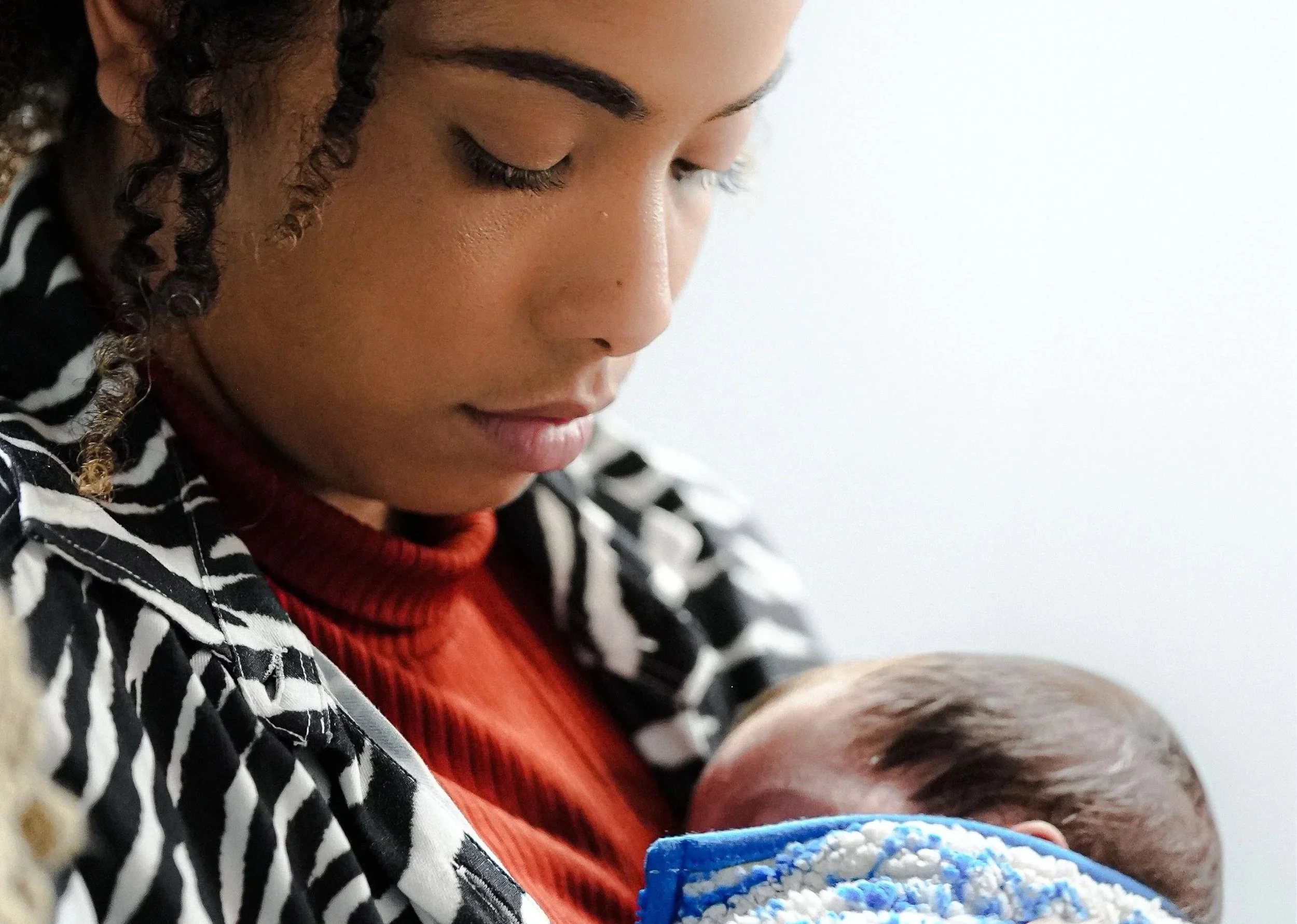
The Things We Lose in the Transition to Motherhood
One reason postpartum grief can feel so overwhelming is that motherhood doesn't involve just one change. It involves dozens of big and small changes that accumulate, until you suddenly realize that your entire life looks different.
Some of the things you might find yourself grieving after having a baby:
Your Independence and Freedom
Remember when you could leave the house without packing an entire suitcase? When you could decide to meet a friend for coffee, go to the gym, or run an errand without coordinating childcare, feeding schedules and nap times? One of the biggest adjustments to motherhood is realizing how little of your time actually belongs to you anymore. Even basic activities require planning, and your ability to be spontaneous can feel like a thing of the past.
You might miss being able to spend an entire day doing whatever you want, having uninterrupted time to yourself, or just being able to make decisions without having to consider how they will affect another human being.
Your Identity Outside of Motherhood
Before having a baby, you probably had a pretty clear sense of who you were. You may have identified with your career, your friendships, your hobbies, your relationship, your interests or the goals you were working toward.
Now, so much of your mental energy revolves around your baby. You're tracking feedings, planning around wake windows, coordinating childcare, scheduling appointments and anticipating everyone in your family’s needs. You might find yourself wondering where the ambitious, adventurous, social, carefree or creative version of yourself went. You may even feel like you don't have anything interesting to talk about with friends anymore because your entire world revolves around your baby.
Your Relationships and Social Life
Having a baby changes your relationships in ways that can feel unexpected. Your friendships may look different, your relationship with your partner may feel more transactional, and you may find yourself spending less time with the people who used to make up your everyday life.
Maybe you miss going out with friends, having spontaneous date nights or being able to plan a girls trip that doesn’t involve your breast pump. Maybe you miss enjoying uninterrupted conversations with your partner - especially ones that aren’t about coordinating tasks and logistics. All of this can contribute to loneliness and isolation, which often makes postpartum grief feel more intense.
You might also find that some relationships become unexpectedly complicated. People who don't have children may struggle to understand your new responsibilities, while your friends with kids may be difficult to coordinate schedules with. It's possible to feel lonely even when you're surrounded by people.
Your Career and Personal Goals
For many women, motherhood comes with a significant shift in professional identity. Whether you've taken maternity leave, transitioned to being a stay-at-home mom, reduced your hours or returned to work fulltime, your relationship with your career may look very different.
If you’ve taken a step back from work, you might miss the sense of accomplishment and intellectual stimulation it gave you, or simply having part of your day that isn’t related to caretaking. If you’ve returned to work in full capacity, you may struggle with feeling like you have less of your time and emotional energy to give. Historically high-achievers may have a hard time setting limits or giving less than 110%.
Your Pre-Baby Body
Pregnancy, childbirth and postpartum recovery can bring about some of the most significant physical changes you've ever experienced.
Your body may look different, feel different and require a completely different level of care and attention. You might be navigating breastfeeding, changes in your hormones, pelvic floor symptoms, changes in your libido or a complicated relationship with your postpartum shape and weight. You may miss being comfortable in your clothes, feeling like your body is just for you, or even recognizing yourself when you look in the mirror.
For some women, there's also grief associated with a difficult birth experience, pregnancy complications or the loss of the postpartum experience they had imagined.
Why it’s Normal to Miss Your Old Life After Having a Baby
So, is it normal to miss your old life after having a baby? Absolutely. Here’s why:
You're experiencing a major identity transition. Matrescence involves a fundamental shift in how you see yourself and how you relate to the world around you. You're learning how to be a mother while figuring out how to maintain the parts of yourself that existed before motherhood. This takes time, and it's natural to feel a sense of loss along the way.
Your day-to-day routine has changed dramatically. Even if you were fully prepared for the responsibilities of having a baby, it's difficult to understand just how much your daily routine will change until you're actually living it. Your time, energy, sleep, relationships and priorities are all different. You're constantly adapting to someone else's needs, often with very little time to recharge.
You're physically and emotionally depleted. Sleep deprivation, hormonal fluctuations, physical recovery and the mental load of caring for a newborn can make everything feel harder. When you're exhausted, it's much more difficult to cope with uncertainty, tolerate frustration or find joy in the little things. Sometimes, what feels like an overwhelming desire to escape motherhood is also a sign that you desperately need rest and support.
You’re overstimulated. Listening to a crying baby day and night can be enough to wreak havoc on anyone’s nervous system. If you have other kids, spend long hours alone with your baby or have a baby who struggles with sleep, that gives you even less time for stillness and recharge. Many parents find themselves missing the ability to go for a walk, shut themselves in a quiet room or make time to wind down without constantly being tethered to their baby.
You’re more socially isolated. Postpartum life doesn’t lend itself to feeling socially supported. Initially you might be limiting your social contact to protect your newborn’s immune system. At the very least, you now have a baby in tow at all times which puts a limit on the types of activities you can participate in. You may struggle to connect with friends who don’t have kids, or have a hard time meeting up with friends whose own kids are on different schedules. And you and your partner may be so full-on in co-parent mode that you’ve forgotten how to be loving, silly, comforting partners to each other. Social support is so important to our emotional wellbeing - and it’s normal to miss your community after having a baby.
Society doesn’t prepare us for both sides of motherhood. We're surrounded by messages about how beautiful, rewarding and fulfilling motherhood is supposed to be. While these experiences can absolutely be part of having a baby, we don't always hear about the boredom, resentment, loneliness, grief and monotony that can accompany early motherhood. When your actual experience doesn't match what you imagined, it can leave you feeling disappointed, confused or even betrayed.
And perhaps most importantly: you can miss your old life without actually wanting to go back to it.
You can love your baby, feel grateful for your family and still wish you could have a little more freedom, independence and time to yourself. You can be happy that you're a mom while also acknowledging that some parts of your old life were really wonderful. Both sets of feelings can exist together.
When Grief is Part of Postpartum Depression
While postpartum grief can be a normal part of adjusting to motherhood, it's also important to recognize when feelings of sadness, loss and disconnection may be part of postpartum depression. Sometimes it can be tough to distinguish between the two. Postpartum depression tends to involve more persistent and pervasive feelings that affect your ability to function and experience joy.
Some signs that your grief may be accompanied by postpartum depression include:
Feeling sad, hopeless or emotionally numb most of the time.
Losing interest in activities or relationships that you previously enjoyed.
Feeling disconnected from your baby or struggling to bond.
Experiencing intense guilt, shame or feelings of worthlessness.
Feeling like you're failing as a mother or that your family would be better off without you.
Having difficulty sleeping even when you have the opportunity to rest.
Experiencing significant changes in appetite or energy.
Feeling overwhelmed by everyday tasks or struggling to care for yourself.
Having persistent thoughts of death, suicide or harming yourself.
If sadness, hopelessness or emotional distress are interfering with your daily life, get in touch with a perinatal mental health professional for support. Postpartum depression is very treatable, but it’s important to get help as soon as possible.
How to Cope When You Feel Like Life as You Knew it is Over
It’s ok to miss your old life after becoming a mom. Instead of trying to convince yourself that everything is wonderful, here are a few ways to make this transition feel a little more manageable:
Give yourself permission to grieve
One of the biggest obstacles to working through postpartum grief is the belief that you shouldn't be experiencing it in the first place. You might tell yourself that you have no right to complain because you have a healthy baby. You may compare yourself to other moms who seem to be thriving, or feel ashamed because becoming a parent was something you actively wanted.
But grief doesn't require you to have experienced a tragedy. You can grieve something even when you've gained something meaningful in return. You don't need to talk yourself out of these feelings or convince yourself that you shouldn't have them. Sometimes, simply acknowledging what you've lost can help you begin to process it.
Separate your identity from your role as a mom
It's easy to fall into the trap of believing that being a good mom means putting every other part of yourself on hold. But motherhood is one part of your identity, not the entirety of who you are.
Think about the things that made you feel like you before having a baby. What did you enjoy doing? What made you feel confident, energized, creative or fulfilled? What relationships were important to you? The goal isn't to recreate your pre-baby life exactly as it was - that’s not possible. It's to start making room for the parts of yourself that you don't want to lose, and recognizing that being a mom doesn’t mean that you have to give them up.
Accept that there is no “perfect mother”
If you're someone who struggles with perfectionism, it may be hard not to hold yourself to incredibly high standards when it comes to motherhood.
You want to be patient, present, loving, organized, emotionally available and completely fulfilled by your role as a mom. You may feel like you should be enjoying every moment, making the most of maternity leave and cherishing this special time.
And when your actual experience doesn't match those expectations, you feel like you're doing something wrong. You’re new at this. It’s not possible to do it perfectly.
Start giving yourself permission to have difficult days, make mistakes and experience feelings that aren't particularly warm and fuzzy. The less you feel like you’re failing, the more connected you’ll feel to your new life.
Make space for things that have nothing to do with your baby
When you're a new mom, it's easy for your entire day to revolve around your baby's needs. And while caring for your baby is an important responsibility, it's equally important to find ways to care for yourself.
Think about what you need to feel like a whole person outside of motherhood. Maybe it's having adult conversations, exercising, pursuing a hobby, spending time with friends or simply having an hour when nobody needs anything from you. Start small. You don't need an elaborate self-care routine or a weekend getaway to reconnect with yourself.
Talk about it
Postpartum grief can feel incredibly isolating, especially when you believe you're the only mom who feels this way. Talking about these feelings can help you recognize that you're not alone. Consider opening up to a trusted friend, your partner or another mom who you feel comfortable being honest with. You may be surprised by how many women have experienced similar feelings but haven't felt comfortable talking about them.
Ask for what you need
Sometimes, what feels like grief about your old life is compounded by the reality that your current life is simply too demanding. You’re pushed past your limits. There simply isn’t enough time in the day.
Take an honest look at how responsibilities are divided in your household. Are you getting enough time to rest? Do you have opportunities to spend time away from your baby? Is your partner sharing the mental load, or are you still responsible for managing everything even when someone else is helping? Ask for specific support. Rather than waiting until you're completely overwhelmed, communicate what you need and work together to make it happen.

Get Support Through Counseling for Postpartum Grief
If you're struggling with postpartum grief, identity loss or the feeling that your old life is gone, working with a therapist can help you navigate this transition with more self-compassion and clarity.
As a postpartum therapist, I work with women who are navigating the complicated emotional experience of becoming a mother. Many of the moms I see are surprised by how much they struggle with the transition, especially when they expected to feel more fulfilled, confident or connected after having a baby.
In therapy, we can explore the parts of motherhood that feel especially difficult, identify the expectations and beliefs that may be contributing to your guilt, and help you reconnect with the parts of yourself that feel like they've gotten lost along the way.
Therapy with me might look like:
Processing feelings of grief, sadness, resentment and ambivalence about motherhood.
Navigating postpartum identity loss and developing a sense of self outside of being a mom.
Managing mom guilt and the pressure to be a perfect parent.
Improving communication and connection with your partner.
Setting boundaries and asking for the support you need.
Finding ways to prioritize your own needs without feeling selfish.
Addressing symptoms of postpartum anxiety and depression.
If you're feeling like your life is over after having a baby, I want you to know that this feeling doesn't have to be your new normal. I’m a perinatal therapist with over 13 years of experience supporting new moms cope with all the complexities of the emotional experience that is parenthood. I see clients located throughout Colorado, New York and New Jersey. If this is you, let’s talk! Feel free to get in touch for a free phone consultation where we can talk more about how I can help you feel more at home in this chapter of your life.
Related Posts:
Postpartum Identity Crisis? Here’s How Postpartum Anxiety Therapy Can Help
Coping with Postpartum Isolation
Postpartum Boundaries: Everything to Know as a New Parent
The Myth of the Perfect Mother: How to Break Free from Perfectionist Parenting
Postpartum Depression Counseling: Healing and Feeling Whole Again
Losing Yourself in Motherhood? Why 4 Months Postpartum Can Feel So Hard